

Dry toilets in the Bolivian highlands. Photo: AECID
Dry Toilets: When The Loo Becomes A Climate Solution
Lady Gaga fans once asked us a perfectly reasonable question in an online forum: what kind of toilets does Xinatli museum actually use? The answer leads straight into one of the most pressing questions of our time: how do we manage drinking water as it becomes ever scarcer across the planet?
Colectivo Xinatli, 18 June 2026
We're taking the community's curiosity as an opportunity to talk about an eco-technology we use here at the museum: baños secos, or dry composting toilets. As the name suggests, they work without a single drop of water. They also help regenerate soil, fertilise plants, and close natural cycles that conventional sewage systems have broken. Here we explain how they work — and why so many stubborn myths about them persist.
Mexico City is under extreme water stress. Experts warn that the day the taps run dry may be approaching. Photo: Jimmy Woo
The water crisis is no longer a distant threat
Fresh water is a finite, essential resource. Just 3% of all the water on Earth is fresh water, and climate change is making that scarcity worse by the day.
Mexico City, one of the world's largest metropolises with around 23 million people in its greater urban area, is teetering on the edge of a severe water crisis. As the New York Times reported, three forces are converging in the capital: climate change, unchecked urban sprawl, and crumbling infrastructure. “We are suffering because the city is growing out of control and there is no way to stop it,” said Gabriel Martínez, 64, who lives in an apartment complex struggling to supply water to its roughly 600 residents. “There aren’t enough resources.”
The groundwater supplying most of the city is being drawn down about twice as fast as it can replenish itself. Last year was the hottest and driest Mexico has experienced in at least 70 years.
Around a third of the capital's water comes from the Cutzamala system, one of the world's largest networks of reservoirs, treatment plants, canals and tunnels, which pumps water dozens of kilometres into the city. What Cutzamala cannot supply, hundreds of pumps make up. Yet around 35% of that water is lost to leaks along a pipe network of over 13,000 kilometres — vulnerable to earthquakes and ground subsidence — the equivalent of 12,000 litres vanishing every second, every day.
The World Resources Institute’s most recent Aqueduct Water Risk Atlas places Mexico City in its highest category: “extremely high” water stress. According to Mexico’s national water commission, nearly 68% of the country is experiencing moderate to extreme drought.
Mexico is the world’s largest per capita consumer of bottled water: each Mexican drinks an average of 273 litres a year, according to UN data. Photo: David Sjunnesson
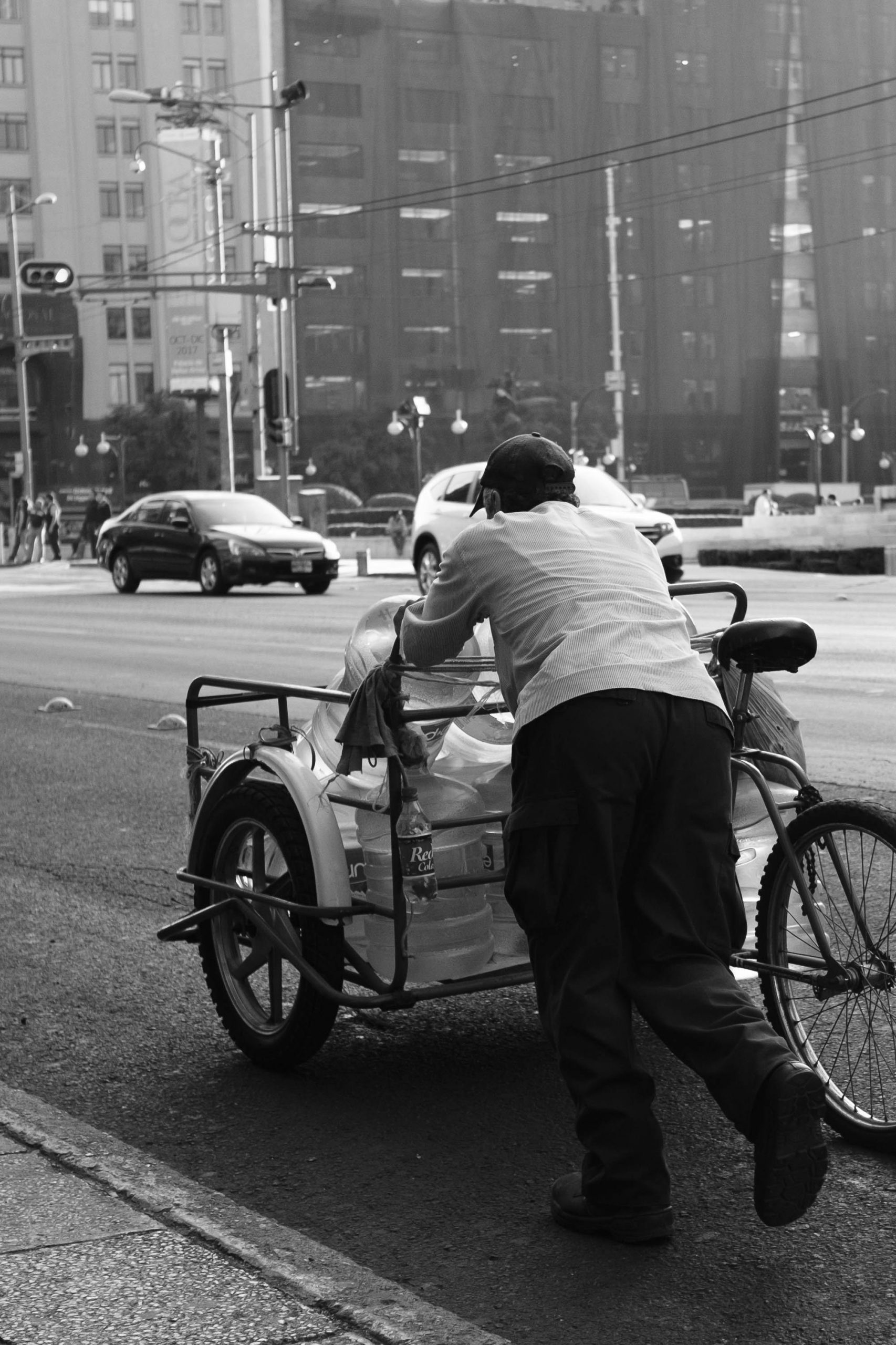
In this context, one phrase keeps coming up: “day zero” (día cero) — the moment when levels fall so low that water simply stops coming out of the tap. Authorities at one point projected 26 June 2024 as a possible day zero for the Cutzamala system. Exceptionally heavy rainfall during 2024 temporarily pulled the city back from that scenario, but experts stress the crisis is far from over. “It creates this feeling of fear, of anxiety, of worry,” said Fabiola Sosa Rodríguez, a researcher in water management and climate policy, speaking to the New York Times. Lizbeth Martínez García, 26, who lives in Iztapalapa and relies on a municipal tanker truck that fills her building’s tanks once a week, put it simply: “We are scared.”
Mexico City is not alone. A study published in Nature Communications in September 2025, covered by CNN, warns that many parts of the world could face “day-zero droughts” — unprecedented periods of extreme water scarcity — as soon as this decade. More than a third of drought-prone regions, including parts of North America, the Mediterranean and southern Africa, could face such a scenario before 2030. Cape Town only narrowly avoided catastrophe in 2017 and 2018; Chennai, India, was days away from running dry in 2019. Today, cities from Tehran to Kabul to Los Angeles are fighting the same battle. Most alarming of all: the study expects low-income communities to bear the brunt.
And here is a factor that almost never gets mentioned: the toilet.
What we flush away every day
A conventional flush toilet uses between 3 and 12 litres of water per flush. Over a year, a single person can get through 15,000 to 16,000 litres of drinking water — just on flushing. To put that in perspective: the same amount would provide two litres of drinking water a day for 22 years. What we send down the drain in one year equals a person’s entire drinking water needs for a large chunk of their lifetime.
The problem doesn’t end there. That water doesn’t just disappear: it returns to the environment as a pollutant. Wastewater flows into pipes and typically empties into the nearest river, eventually reaching the sea.
Treatment plants would be the answer, but building and running them is expensive, and many operate well below capacity. As a result, large volumes of untreated sewage reach rivers and lakes — contaminating the very water sources that could otherwise serve as alternatives. We use drinking water to transport nutrients, then dispose of those nutrients as a pollutant. It is a linear system with a double loss.
A treatment plant ensures water is mostly free of germs and chemicals. The ASKI Tatlar wastewater treatment facility in Ankara, Turkey– one of the largest in Europe – processes around 765,000 m³ of municipal wastewater daily. The treated water is returned to the Ankara River. Foto: Selim Arda Eryilmazz
How a dry toilet works
Dry toilets turn this logic on its head. Instead of using water to flush waste away, each use is followed by a covering of dry organic material — usually sawdust, but sometimes dried grass, leaves, or shredded paper and cardboard. The process is straightforward: a couple of scoops of sawdust, close the lid, done. That is all a user needs to do.
The dry material serves several functions at once: it absorbs moisture, covers the waste, and kick-starts a natural decomposition process. Over time, through controlled composting, the residues are transformed into nutrient-rich earth. The process takes around one to two years — enough time for dryness and natural decomposition to reliably neutralise pathogens. The end result is not waste but fertile humus, returned to the soil.
Models with a urine-diverting insert collect urine separately. Thanks to its high nitrogen content, it can be used as an organic fertiliser for fruit trees and other crops after a brief stabilisation period.
What makes these systems particularly appealing is their flexibility: a dry toilet can start life as a simple bucket and scale up to a fully built masonry composting chamber. It is a technology that grows with whatever is needed.
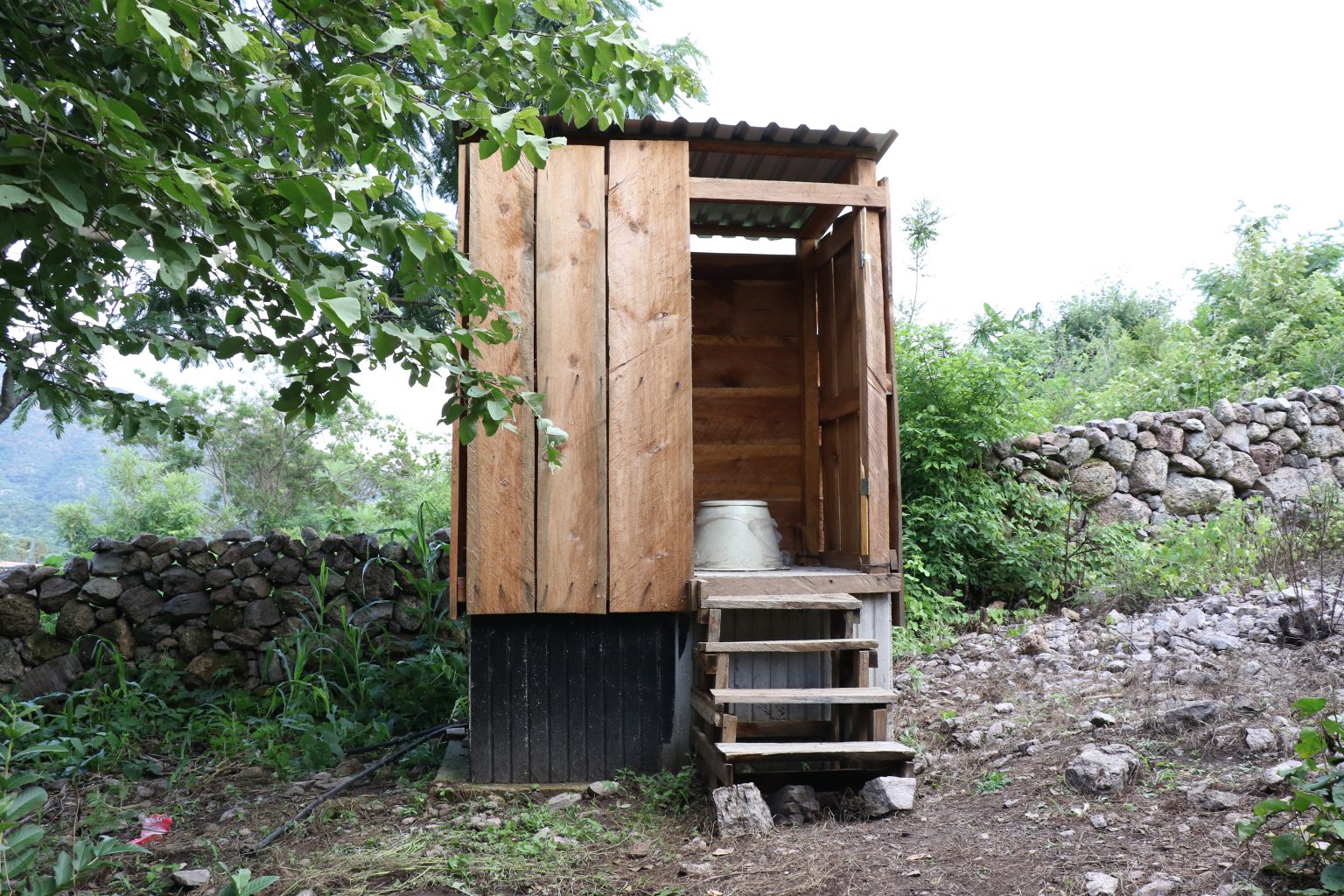
Residents of Las Guayabas, San Andrés Cohamiata, Mezquitic, Jalisco, took part in a training workshop on the proper use and maintenance of dry toilets. Photo: Jorge Avalos Ledesma, Diffusion CUNorteFoto
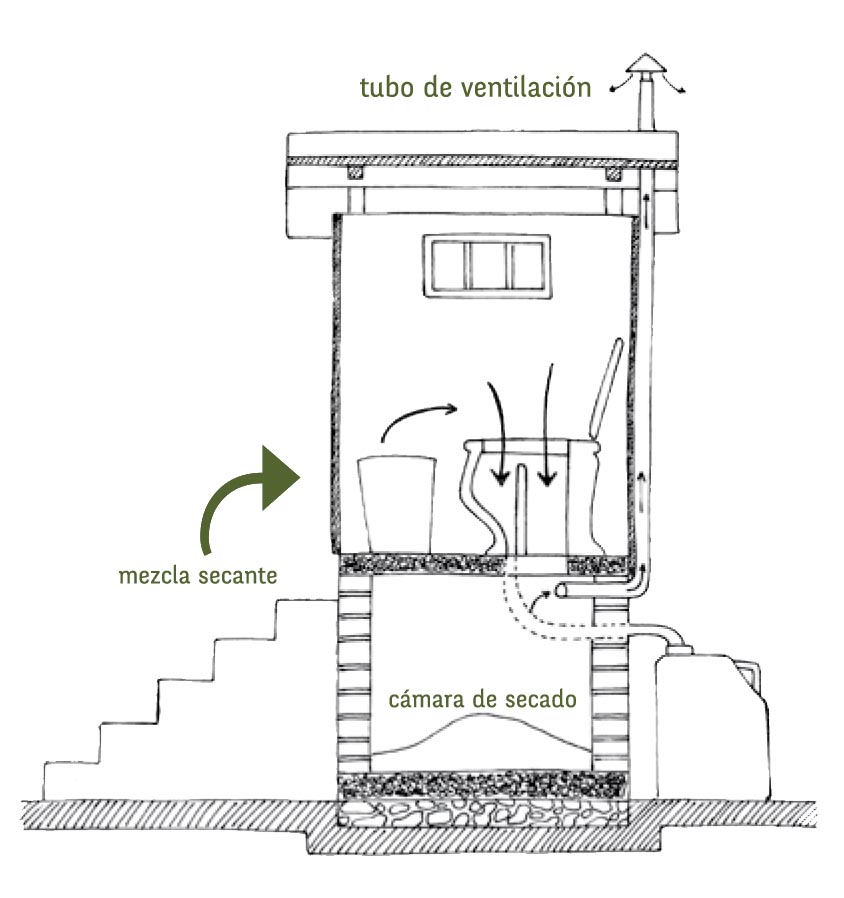
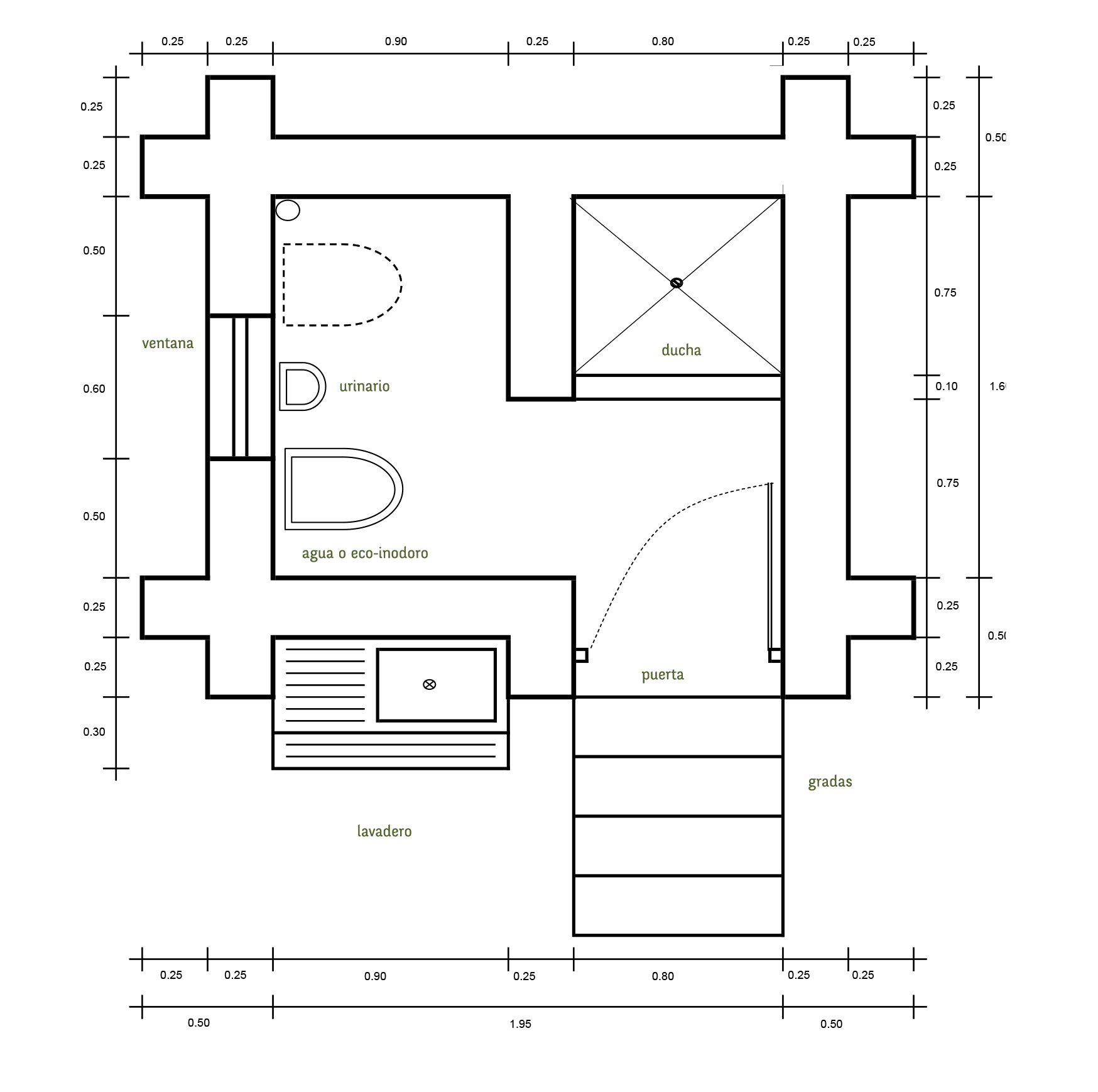
Source: Manual de construcción de los baños ecológicos / UNAM
The benefits at a glance
The most obvious benefit is total water savings: zero litres per visit, instead of thousands of litres per year. In the rural community of Otepec in Veracruz, the organisation Bosque de Niebla installed 30 dry toilets, saving each family around 55,000 litres of water annually — water that now stays in the household.
The second benefit is safe sanitation. Without water in the system, there are no leaking septic tanks, no soil infiltration, and no contamination of aquifers — a major source of gastrointestinal illness. In areas where pit latrines and rudimentary tanks contaminate wells and springs, this represents a huge public health gain.
The third benefit is perhaps the most elegant: waste becomes a resource. What was once a problem becomes fertility. The resulting compost is nutrient-rich and pathogen-free, replacing chemical fertilisers in reforestation, gardening and agriculture. It closes a cycle that sewage systems have broken open: we return to the soil what originally came from it.
There are practical advantages too: dry toilets are cheaper and easier to maintain than conventional systems, they need neither electricity nor chemicals, and they work independently of any sewage connection or water pressure. And the scale is no barrier. The Las Cañadas permaculture centre in Veracruz has used dry toilets since 1996 and has been running construction courses in Huatusco since 2007. In Bolivia, over 5,300 ecological dry toilets were built across 186 communities, carefully adapted to the worldviews of Aymara and Quechua peoples. In Mexico City, a cycling race with 2,400 participants was held without a single drop of flush water at any of its facilities.
One of the most common practical obstacles — what to do with the contents once a container is full — has already been solved in Oaxaca. The company W Seco sells dry toilets and offers a household collection service: it picks up full containers, takes them to its own composting site (where over 20 tonnes of material are already being processed), and after a year returns the result as humus. This urban logistics model is key to making dry toilets a realistic option in cities, not just in rural areas.

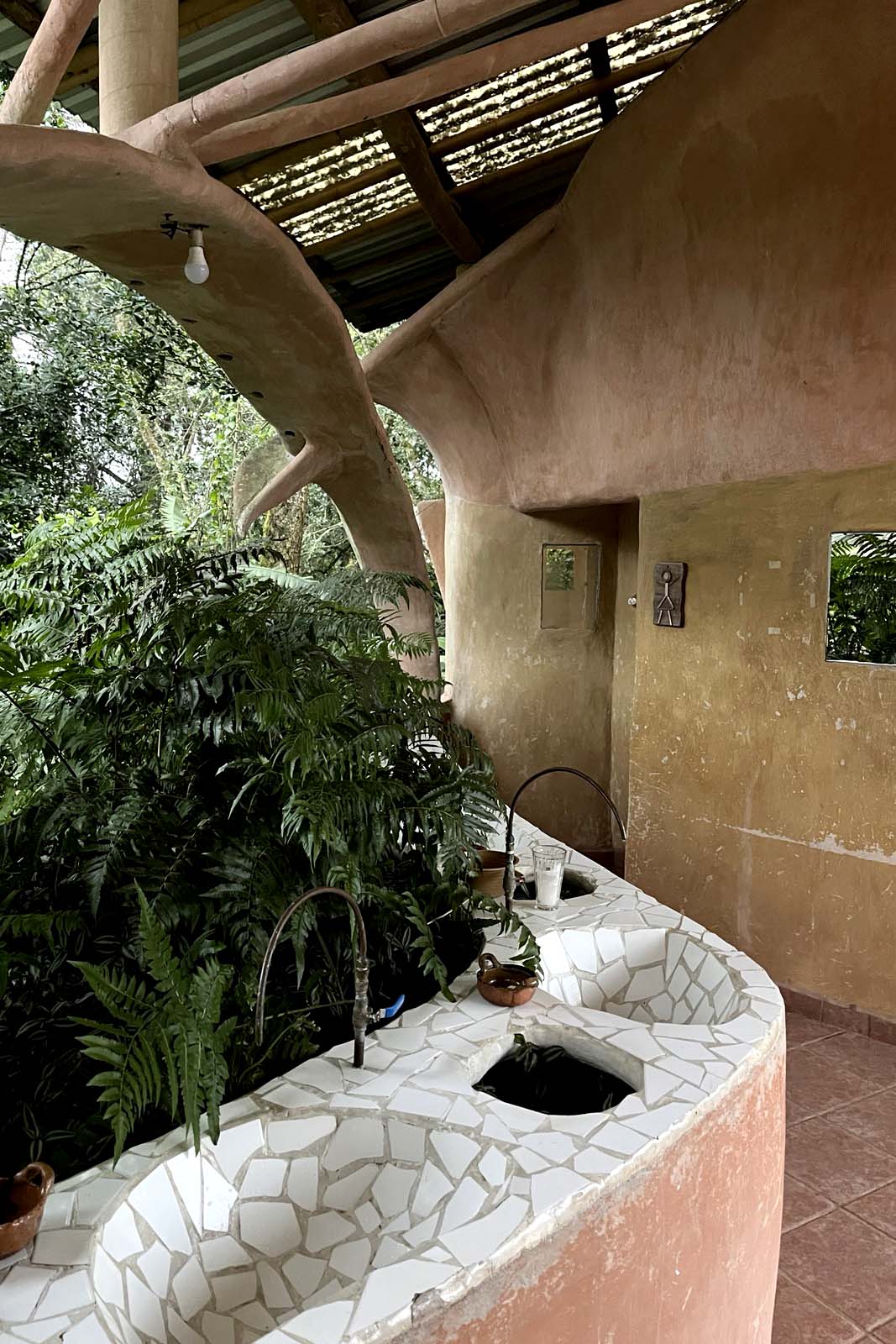
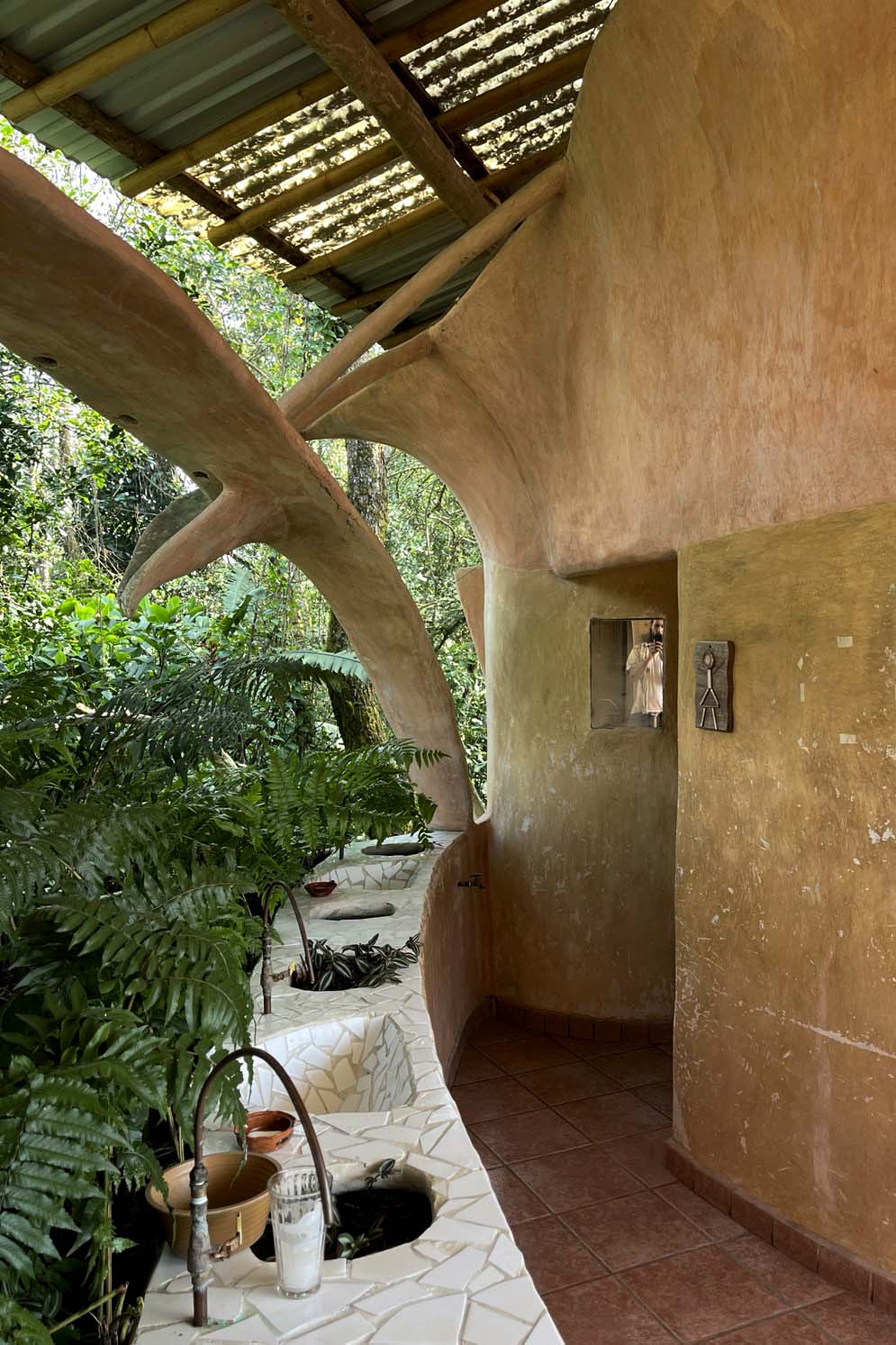
Comfort without drinking water or chemicals: the washing area at Las Cañadas uses filtered rainwater for handwashing. Photo: Frank Steinhofer
Busting the myths
If dry toilets have so many advantages, why aren’t they everywhere? The barrier is rarely technical — it is cultural. Water in the bathroom is still widely seen as a marker of hygiene and progress. Yet it is precisely this water-based system that has driven today’s water pollution and a deep disconnection from natural cycles.
Several myths cling to dry toilets, but none of them hold up to scrutiny.
Myth 1: “They smell.” The opposite is true. The familiar smell of a conventional toilet comes from water sealing waste in an oxygen-free environment, where it begins to rot. In a dry toilet, the covering material absorbs moisture and stops that process. Open a well-maintained dry toilet and you will find nothing unpleasant — just sawdust.
Myth 2: “They’re unhygienic and a health risk.” The residues are not used immediately: they go through a controlled composting process of up to two years, during which dryness and natural decomposition reliably neutralise pathogens. The result is fertile, safe earth — not a health hazard. As with any technology, correct use is essential: cover well, use enough dry material, ensure ventilation.
Myth 3: “They attract insects.” Because waste is consistently covered and there is no standing moisture, flies and other insects find no conditions to breed. Dryness, again, eliminates the problem that water creates.
Myth 4: “They’re only for rural areas without plumbing.” Dry toilets are by no means a stopgap for remote villages. They work equally well in urban flats, schools, community centres, hotels and cultural venues. In Oaxaca, a biocultural guesthouse has adopted them. In Mexico City, they are manufactured from recycled plastic and offered with a collection service. They are, in short, for anyone who wants to leave behind clean rivers and living soils.
Why Xinatli museum uses dry toilets
Which brings us back to the original question from the forum. Xinatli’s use of dry toilets is part of its identity as an ecological museum. A place dedicated to the relationship between people and nature cannot speak about sustainability while thousands of litres of drinking water disappear down the pipes every day. The dry toilet here is not a curiosity — it is a living practice, a concrete example of circular thinking that does not stop at theory.
Our relationship with rivers, with water, and with our own bodily waste needs to change. The water crisis that once seemed like a distant scenario is already a reality in many parts of Mexico, Latin America and beyond. Day zero is not an abstract threat — it is a real possibility. The good news is that every individual can do something about it, and one of the most effective changes begins in the one place we rarely like to talk about.
The real revolution starts in the bathroom.
An adobe toilet block at Museo Xinatli, the dry toilets are also built with earth rather than concrete. Photo: Ilan Rabchinskey

xinatli – museo de investigación artística
xinatli is an artist-led initiative that seeks to spark new discourses, and ultimately build plattforms that advocate for greater ecological and social equity.
general information
Xinatli began as a literary project and, seed by seed, took root beyond its pages. Since 2021, artists and architects have been developing ideas, designs and projects centred on the initiative. Its final form — a building, a school, a platform — is still being decided, in collaboration with those who are imagining it alongside us.
For journalists, researchers or organisations seeking further context: proyectos@xinatli.org.
mixed media
for project descriptions, sketches, images, press releases. » see more
this is an artist initiative. we use no cookies nor tracking.